
Synchronous
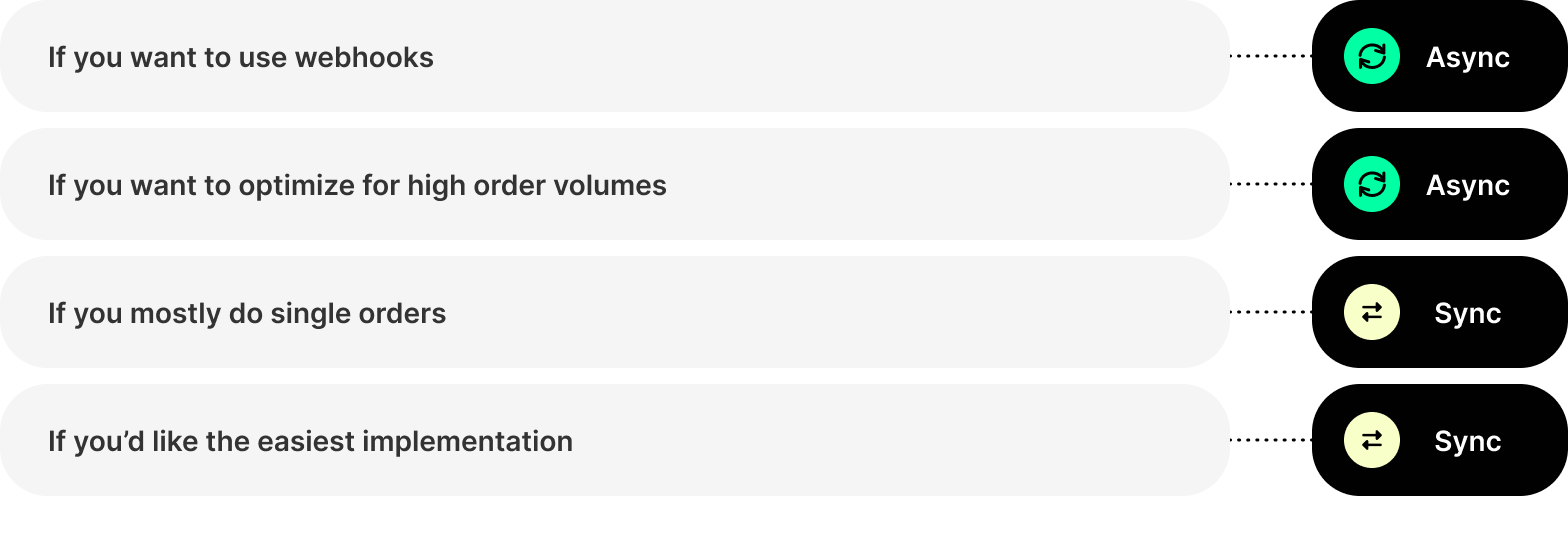
If your orders are small with one order per transaction, the synchronous mode would be better for you.
It enables direct retrieval of payout links from the order response, streamlining integration into a single step.
It enables direct retrieval of payout links from the order response, streamlining integration into a single step.
Asynchronous
For larger orders involving multiple payout links, the recommended approach is asynchronous mode.
This mode enables you to initiate the order first and then either poll an additional API endpoint for payout links or receive the payout links via a webhook, thereby creating a two-step integration process.
This mode enables you to initiate the order first and then either poll an additional API endpoint for payout links or receive the payout links via a webhook, thereby creating a two-step integration process.
Which one is right for you?